Logout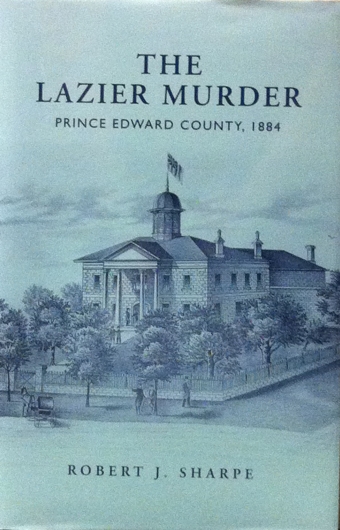
The Lazier Murder: Prince Edward County, 1884
 2011
2011 
by Robert J. Sharpe, Justice of the Court of Appeal for Ontario. Published with the University of Toronto Press, 2011.
Robert Sharpe is one of the Osgoode Society’s most prolific authors, and his latest offering is a compelling account of a late nineteenth century murder case in Picton, Ontario. This very thoroughly researched and engagingly written case study details the murder of a local resident and the subsequent court and governmental proceedings. What emerges is a fascinating insight into the operation of the policing, prosecution and trial processes of late nineteenth century Ontario, one that shows how much public opinion and courtroom atmosphere could at times affect the outcome of a trial. The Lazier Murder also looks at the executive commutation process by which it was decided if those sentenced to be executed would be hanged. Sharpe’s account suggests that this may well have been a case of what we would now call a ‘wrongful conviction.’
Related Topics
Contents
Contents
FOREWORD vii
ACKNOWLEDGMENTS ix
ABBREVIATIONS xi
MAP xii-xiii
1 Introduction 3
2 The Crime 7
3 Hugh McKinnon, Detective 20
4 A Place Apart 33
5 Coroner’s Inquest 41
6 Committal Proceedings 47
7 Picton Spring Assizes, 1884 56
8 Surprise Evidence 74
9 The Defence 83
10 Verdict 103
11 Last Hope 115
12 Pleas for Mercy 130
13 The Day of Execution Approaches 139
14 Community Conscience 150
NOTES 161
INDEX 185
Awards
- Winner of the Fred Landon Award of the Ontario Historical Association (2013)
Reviews
[A] new book by an Ontario judge makes a case for what some observers began to suspect in the aftermath of their trial - their convictions may have been a miscarriage of justice, the product of amateur detective work and a rush to judgment by a police chief determined to make his name as a crime buster and by a community bent on revenge.... Sharpe, a judge on the Court of Appeal for Ontario, has written several books on historical legal cases, but this one has special significance.... The community, Sharpe speculates, may well have felt a collective sense of guilt over what happened and the possibility at least one innocent man had been hanged.... The case is also a powerful reminder of the potential for wrongful convictions and how the mood of a community can influence the result. Tracey Tyler, Toronto Star, 20 December 2011
Lori Chambers, Acadiensis, Vol 41, 2012, p. 250.