
 Logout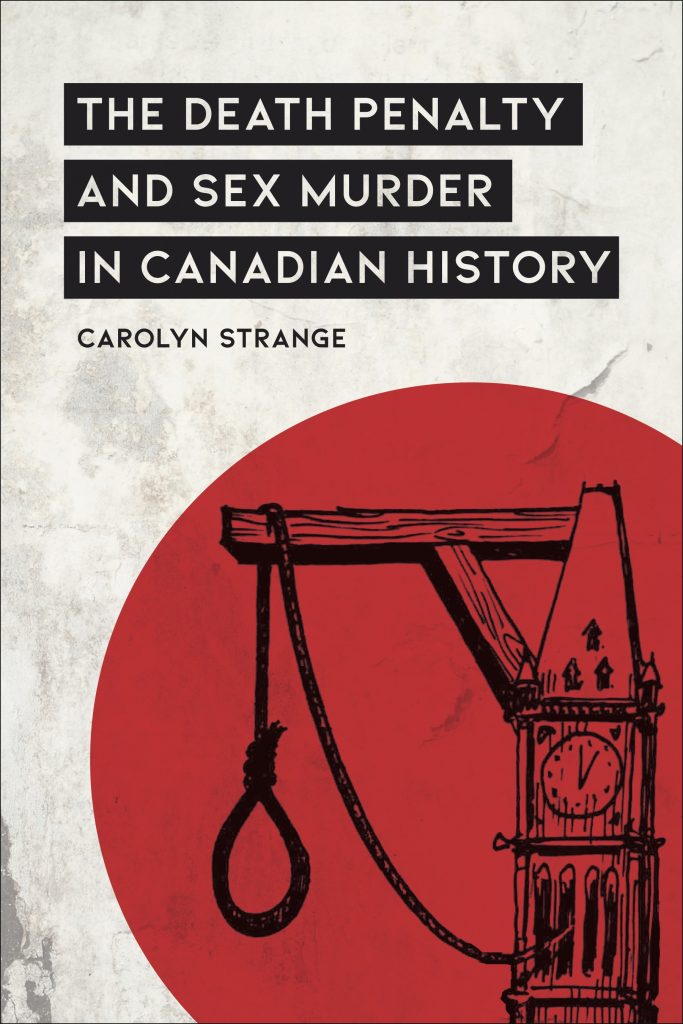
 2020 Optional Extra
The Death Penalty and Sex Murder in Canadian History
 2020
2020 
By Carolyn Strange, University of Toronto Press.
This major study of the operation of the death penalty focusses on the disposition by executive review of all cases between Confederation and the abolition of the death penalty in which the offender not only committed murder but did so at the same time as he (or she) also committed a serious sexual offence. Professor Strange is able to show that such offenders fared much less well in the commutation process than other people convicted of murder and sentenced to death. As importantly, she divides the overall narrative into six periods, showing that within each period political, administrative and public consideration of the cases were conducted against a background of other concerns, ranging from the ‘danger’ of immigrants to the rise of psychiatric concern with such offenders to the abolition movement of the 1960s.
REVIEWS OF THE DEATH PENALTY AND SEX MURDER IN CANADIAN HISTORY HAVE ALSO APPEARED IN:
R. Blake Brown, The Canadian Historical Review, Vol. 102, 2021, pp. 509-511.
Greg Marquis Histoire sociale / Social History, Vol. 55, 2022, pp. 222-223.
Contents
Acknowledgements / vii
- The Politics of the Death Penalty and the Problem of Sex Murder / 3
- Sex Fiends and the Death Penalty at the Turn of Canada’s Century / 23
- Contesting Convictions and Questioning Culpability between the Wars / 60
- Sexual Psychopathy and Penal Severity in the Post-War Era / 97
- Sexual Psychopathy, Insanity, and the Death Penalty under Scrutiny in the 1950s / 141
- Sex Murder in the Sixties and the Demise of the Death Penalty / 182
Epilogue: The Problem of Sex Murder in the Shadow of Abolition / 224
Reflections on Sources and Methods / 235
Notes / 241
Index / 357